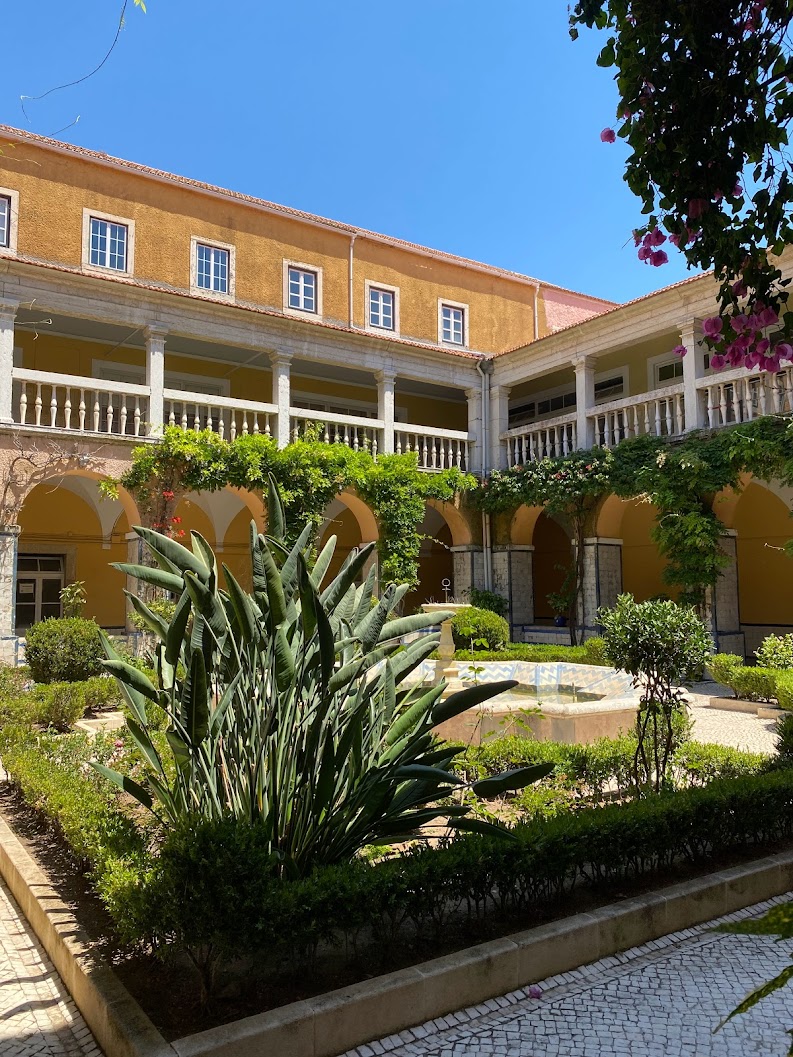
Link to Requiem Mass for Sr. Patricia Mc Grath O.P. Iona House, Fortwilliam Park, Belfast.
Requiem Mass for Sr. Patricia Mc Grath O.P. Iona House, Fortwilliam Park, Belfast. 30th June 2021


How many of us are aware that we are foundresses of at least five  daughter congregations, three in Australia, one in New Zealand in addition to the one founded in New Orleans which is now incorporated into the Dominican Sisters of Peace? As it is 150 years since the foundation of the New Zealand Dominicans, let us unite with them in their celebration by recalling something of their early beginnings.
The New Zealand Dominican congregation has its roots in Sion Hill in the second half of the nineteenth century. At that time, emigration was well and truly integrated into Irish experience. Bishops in Ireland found themselves answering the call of the Irish abroad to establish churches and schools in their new homes usually located in areas colonised by the British Government, places including Australia and New Zealand.
Bishop Patrick Moran, incidental in founding the New Zealand mission knew the Dominican sisters in Sion Hill well from his time as curate in the parish of nearby Booterstown. Shortly after his appointment as Vicar Apostolic to Port Elizabeth, South Africa in 1869, he invited the Sion Hill sisters to come and set up schools there. Being well pleased with the progress of their work in that part of the world, he was more than anxious to have sisters from that community accompanying him to his new diocese in New Zealand. In 1870, he approached the prioress, Mother Clare Elliott who was not long in finding ten volunteers in her community willing to take on the long hazardous journey to this faraway destination and to establish schools there. The Archbishop of Dublin, Cardinal Cullen, knowing that the new foundation would be more demanding than the previous one in South Africa, stressed that the mission was to be voluntary and outlined a procedure to be followed for the security and wellbeing of each sister. In principle he consented, but he did ask some searching questions of the community.
In addition, each sister had personally to write a declaration in a bound volume stating that she was leaving the community of her own free will and would relinquish all claim on Sion Hill. They might be leaving Sion Hill, but it would be very difficult to return.
Mother Gabriel Gill, thirty-three years of age was appointed prioress of the mission. The Cardinal’s questions and formal procedures did not lessen the zeal and enthusiasm of the ten sisters. They were heading into the unknown and doing it with a great spirit of adventure. The oldest sister to travel was Sister Agnes Rooney, aged fifty-nine who had been a novice in Cabra and the youngest, Sister Bertrand McLaughlin, aged nineteen. This last sister was a relative of Sisters Maureen and Jeanne McLoughlin, whom most of us would remember and who died some years ago. For his part, Bishop Moran was to provide a house and schoolrooms with furniture and the services of a chaplain until such time as the sisters could afford a chaplain’s salary. He also undertook as in South Africa, not to interfere with the internal affairs of the community.
Transcript of Mother Gabriel Gill’s Declaration
I, Sister Mary Gabriel known previous to my entrance into religion by the name of Victoria Margaretta Gill make for the satisfaction and legal protection of all whom it may concern the following declaration:
That I have of my own free will and choice and with full knowledge that I was not in any way obliged thereto by religious rule or obedience elected to be removed from the religious house of the nuns of St Dominic known as St Catherine’s Sion Hill, Diocese of Dublin in order to become a member of a new community or foundation of the same religious Order in the diocese of Dunedin, New Zealand under the jurisdiction of the Right Rev. Dr Moran and his successors canonically appointed, to which the Community of Sion Hill has contributed the sum of ₤900 – and I further renounce all claims or pretended claims other than those sanctioned by the Canons and Discipline of the Roman Catholic Church and the Rules of the Order which the civil law may give me over the present property of the Community which I am leaving, which may have been assigned to it as my dower or acquired by my personal exertions or which may otherwise through me or in virtue of my civil rights devolve to it according to the laws of the Catholic Church.
Dated this 30th day of September 1870 Sr M Gabriel Witnessed on the 3 of October 1870 Father Fagan?
According to the Sion Hill annals, great preparations were made for the journey.
Trunks, in dimension rivalling lesser Arks, appeared, and were filled to the brim with every domestic, ecclesiastical and conventual requirement, that the idea of a new country suggested.
Bishop Moran was to travel with them all the way, a new experience for him as well as for the sisters. Catholic missions had begun in New Zealand only some years earlier, in 1833, mainly by the Marists whose option was to the Maori. The bishop’s aim was to set up church structures in his new diocese to facilitate the worship of Catholics. Many of these latter were Irish who had crowded into the area on account of the gold rushes. The Sion Hill sisters establishing schools there were to help him carry out this project.
Finally, the day of departure dawned. The ten, accompanied by Bishop Moran travelled to Kingstown, now called Dún Laoghaire, and from there sailed to Gravesend on the Thames. They then changed to the sailing ship the Glendower which was to travel straight on to Australia. The journey would in all take roughly four months using the sailing route down through the mid-Atlantic and then sharp east all the way past the Cape of Good Hope, finally reaching Sydney and making wise use of the strong westerly winds of the ‘Roaring Forties’. This sailing boat did not use the Suez Canal which was opened only in 1869 and was not yet availed of much by the British.
The sisters began their journey 5 October 1870 and reached Sydney, Australia 2 February 1871. Sion Hill has no diary of this voyage, but some paragraphs from a letter from Mother Gabriel Gill in the archives there give a flavour of her character and of life aboard.
On board the Glendower, Feast of St Lewis Bertrand – 1870
My own dear children,
…We started from Gravesend this morning at about six o’clock an hour or more before any Sr. rose – After dinner this afternoon (about 3.30 o’clock) our good father the Bishop (Bishop Moran) placed me in a little corner of the vessel frequented only by the priests, but sheltered from the severe blasts, to take a view of the coast of France. Of course only the outline could be discerned in the distance. At that moment Sr. M. Vincent came near and was placed at my left, His Lordship still on my right. Then he entertained us on some interesting subjects – One piece of information he gave us was that we are not ‘Clippers’ at all! We are on a sailing vessel and he shewed us a ‘Clipper’ over towards the coast of France. It was a vessel called Clipper-rigged (sic) and not so large as ours…
I regret very much not having time to write separately to each novice, especially to my poor little ‘Capers’ who wrote me such nice letters and who took so much pains on my account to make me comfortable. I would have preferred less fuss and attention, but in the last moment I could not bear to send any of my children away from me if it gratified them to be busy about me.
Wishing you all the best gifts and blessings that our divine Spouse can bestow on His own.
I remain my own beloved children, Your unworthy but devoted Mother in Jesus, Mary & Dominic, Sr M. Gabriel Pray much for us all.
Living the journey to the full was part of the experience of going on mission. In addition to a carefully observed prayer timetable, Mass on Sundays and often on weekdays, life was busy. Study of Italian and the reading of Dante by the more advanced, passed many happy hours away. The sisters, hitherto enclosed, enjoyed a very interesting social life on the boat, mixing well with both Captain and passengers besides enjoying the friendship and concern of the bishop and his two companions, Father Coleman, and Father Walter McDonald of Panmure, Auckland who was returning to New Zealand after a holiday in Ireland.
Besides the pleasurable pursuits of a long leisurely voyage, the sisters twice endured the fright and threat of fearsome storms. They experienced the first one very early on in the English Channel where the ship lost two anchors and had to return to Plymouth for repairs. The second terrifying storm rose suddenly just as they had rounded the Cape of Good Hope on the evening of Christmas Day when the sailors were somewhat merrier than normal. These latter were in a more unready state than usual to clamber up rigging and ropes to their posts while danger was just on the verge of threatening their very lives and hurling them into the deep. Thankfully, the howling winds and towering waves soon died down and the ship continued steadily on its course to Sydney. From Sydney the group travelled to Melbourne to take the steamship SS Gothenburg, crossing the Tasman Sea and finally reaching their destination, Dunedin a little over a fortnight later.
When sisters and bishop arrived in Dunedin, they discovered that few if any arrangements had been made for them. Father Moreau of the Marists, expected only one sister, instead there were ten. They were put up in the presbytery while the bishop found himself accommodation elsewhere. The sisters began school three days later. Gradually it emerged that a collection had been made for their upkeep, but no one knew where the money was. One of Mother Gabriel’s first acts was to check all the bills for their groceries and pay from the money which Sion Hill had given them. Fortunately, this dilemma was promptly solved to everyone’s satisfaction.
Bishop Moran immediately set about fundraising for churches and schools. The people responded generously. Two more sisters joined the community in 1874, travelling out on the Janet Cowan with Father Coleman who had been with the sisters on the earlier voyage. As before, this was a journey not without its hazards. The Captain and men on board were mostly Freemasons, with whom there was little ecumenism in those days and besides being inexperienced this Captain was also very fond of the drink. On reaching New Zealand, it was Father Coleman who informed the Captain of his whereabouts. The boat had quite some difficulty in getting to land but finally with timely help from on shore, all passengers and crew arrived safely to port.
The earnest and well-organised manner of working which the sisters had acquired in Sion Hill bore much fruit as in very few years, they had opened further schools and were looking for more sisters to work in them. Six more arrived from Sion Hill in 1881, but more were needed. In pursuit of this objective, Mother Gabriel Gill sought permission from Archbishop Kirby, thenRector of the Irish College in Rome to travel home and establish a novitiate in Dublin to recruit novices for the New Zealand mission. Bishop Moran was in full agreement, but Archbishop Cardinal McCabe of Dublin (and his successor Archbishop Willie Walsh) did not really want anyone from abroad recruiting novices out of the diocese. According to Mother Clare Elliott, the Cardinal “feared a too great missionary spirit would get into the home community”.
Mother Gabriel travelled to Ireland in April 1886 and in June was warmly welcomed by Sion Hill. She also made contact with her father, her mother having died four years before. The noviciate was established on a property they secured rent free in Beaumont in Drumcondra. Mother Gabriel recruited about eight young women who were enthusiastically prepared for their future work. Unfortunately,the postulants were subject to many disappointments as their official reception ceremony was being continually postponed. The difficulty seems to have been that the Archbishop of Dublin did not really trust Bishop Moran’s assurance that the novices were the responsibility of the diocese of Dunedin and that in consequence, he (Archbishop Walsh) would incur no expense whatsoever on their account. After many letters between Mother Gabriel and the Archbishop, the long-awaited clothing ceremony did eventually take place. Nonetheless the difficulties had been such, that in less than two years, Mother Gabriel decided to return to New Zealand with the eight new members she had secured for the mission. Before leaving Ireland however, she sold what she could of the furniture and brought the rest back to New Zealand. The journey to Dunedin on the SS. Orizaba took something over two months, from October 1887 to January 1888 as the steamship was much faster than a sailing vessel. We know nothing of the route they took, but on arrival at their destination, Mother Gabriel and her eight novices were delightedly welcomed.
The Dominican sisters were nearly twenty years in New Zealand when they held their first chapter. By this time they were responsible for at least six or more foundations. All were administered from Dunedin, a centralised form of government the sisters had inherited from Sion Hill. Their great friend, Bishop Patrick Moran died on 22 May 1895 and was very greatly missed. His successor, Bishop Michael Verdon though a kindly man, could not fill the place in their hearts occupied by his predecessor.
The arrival of the Mercy sisters to Dunedin and the change of bishop were two reasons that caused Mother Gabriel Gill and the New Zealand Dominicans to look further afield for future foundations. Through meeting with Bishop William Kelly, they were invited to make a foundation in his diocese of Geraldton in West Australia. He invited them saying:
“ There is work to be done. Are you willing to do for God what miners will do for gold?”
This invitation marks the coming of age of the Dominican Sisters in New Zealand. By 1899, they possessed sufficient self-confidence to enable them to accept Bishop Kelly’s invitation and make a new beginning in the totally different environment of West Australia. In the largest diocese of that new country, Mother Gabriel and five other sisters threw themselves fully into the challenges of ministry in this mining area. Mother Gabriel died six years later in 1905 and is today greatly venerated in that part of the world while the ministry in West Australia still lives on.
By the beginning of the twentieth century, three decades after the first foundation, Sion Hill had sent out between twenty to thirty sisters to Dunedin. In the archives in that community, is the transcript of a fascinating diary by Sister Mary Louis Keighron of the journey of a group of sisters travelling to New Zealand on the RMS Orontes.
The sisters journeyed on this ship which was making its maiden voyage, beginning on 24 October 1902 and reaching Sydney via the Suez Canal and Melbourne. The Canal route was now being used freely by most shipping lines. Sister Louis writes colourful accounts of the companions on the voyage, of seascapes, visits to places like Naples, of which she gives a vivid description, a storm in the Indian Ocean and meeting the sisters from Cabra in Adelaide. She also tells of unexpected get-togethers with others whom she had known in Ireland, which by this time was over half a world away. She describes sports and pastimes organised specially for the passengers, events such as a Fancy Dress Ball. She writes …
They are getting up to all kinds of games now. We expect a cricket match in a day or two. Quoits is the favourite game at present. As I write, the deck is being prepared for a dance: this amusement takes place twice a week. We spent the whole day writing letters and post-cards to be ready for Port Said tomorrow. No one will be allowed to go on shore, as Captain fears there may be cholera there…
Sister Louis arrived safely in Dunedin and laboured in the ministry there until she died in 1920.
At the present time the Dominican sisters in New Zealand while living in a vastly different world to that which faced their spiritual mothers are inheriting the same pioneering spirit. Over the past century and a half, the congregation has seen many changes, many challenges to the religious way of life. Nonetheless every Dominican sister in her heart “may walk backwards into the future with her eyes fixed on the past” bearing the conviction that the same Holy Spirit is at the helm and steering us all steadily and safely through the confusion of the twenty-first century. At the end the Lord God will still the storm and bewilderment around us and “cause righteousness and praise to spring up before all the nations” once more. (Is. 61, 11b)
Sr. Mary O’ Byrne
Congregation Archivist
Assisted by Sisters Helen McGing and Noelle Jennings
We are delighted to share the link to a guided tour of the Convent Bom Sucesso, Belém, Lisbon. The program was aired on the Portuguese national TV station RTP2 about Bom Sucesso, https://www.rtp.pt/play/p7378/e484388/visita-guiada
 I would like to congratulate Sr Máire on her wonderful documentation of the social history of Ballyfermot and the impact that Dominican Education had on the lives of the young women with the provision of educational facilities.
She certainly captures life in the early 1950s vividly and how the opportunities provided by the Dominican sisters and other Religious organisations encouraged the young women to believe that education was crucial in their lives and in their future.
Sr Máire and the other sisters certainly laid strong ‘foundation stones’ for the people of Ballyfermot and for all of us who were lucky to follow in their footsteps in continuing to embed the importance of holistic education in our schools.
The Primary schools grew rapidly and went from strength to strength which resulted in the establishment of St Dominic’s Secondary School in 1956. Now, more than 60 years later, we are proud to continue to provide a strong and vibrant education for our young girls under the Trusteeship of Le Chéile.
Personally, I am honoured to have been lucky to spend 41 years of my teaching career in Ballyfermot, having arrived in St Dominic’s in 19-77!!!!! Naturally, I have experienced many changes and opportunities in the intervening years and I have no doubt that thanks to the Dominican Sisters, local Community organisations, staff and parents, we have certainly ensured that all our young ladies were challenged to be ‘the best that they can be’ and were and are provided with opportunities to take their place in an ever changing world.
Mar focal scoir, I certainly look forward to documenting the many memories from 1978!!!
Thanks to Ken Larkin Ballyfermot Heritage Group who captured the launch through photos and videos which can be viewed by clicking this Flicker Photo Album https://www.flickr.com/photos/ballyfermot/albums/72157711973462897 enjoy!
Mary Daly Former Teacher (September 1977 to 1997, Principal August 1997 -2018)
Sr Maire died in March 2024. May she rest in peace.
 Click below to listen to the John Bowman broadcast (Sunday 21st July 2019) archival interviews of our Sister Margaret Mac Curtain OP (Sr Ben)
Congratulations Margaret on your life long commitment as a Dominican and inspiration to many!
https://www.rte.ie/radio/radioplayer/html5/#/radio1/11065888
Concluding remarks by Sr. Maire McHugh OP, Mission Area Prioress Ireland, at the Thanksgiving Mass to mark the closing of St. Rose’s Dominican College, Belfast.
Ascension Sunday 2nd June 2019,
St. Paul’s Parish Church, Falls Road, Belfast
How often have we found when looking through the lens of the Gospel that we can always see our own lives. For me today is one of those times, as I listen to the Gospel story of the Ascension. It is a Gospel about change, about transition. No one likes change! yet for the disciples the departure of Jesus was an important point of growth for them. Jesus was to be with them in a very different way. Yet for them his leaving was very painful indeed. Letting go of the physical presence of Jesus and adjusting to the new reality that was unfolding for the disciples did not sit comfortably with them.
This is a time of transition and change for those of you who have been so loyal to St Rose’s College. Like all endings, it can leave you disturbed and bereft. And yet, very often too the very idea of endings can be a time of inspiration and the promise of new possibilities.
Though St Rose’s, Dominican College, is closing, each of you, members of the Staff, the Board of Governance, Past Pupils, have embodied the values of Dominican Education, that search for the Truth, the source of inspiration that guides you in your efforts to respond to a rapidly changing world…or as Sr Catherine of Siena said, “Preach the Truth as if you had a million voices. It is silence that kills the world.”
None of us can underestimate how over the last number of years, the reduction of budgets, the years of uncertainty and the amalgamation with two other schools, has affected you the staff and board members. However, as Grace Mc Callion said in her invitation letter, “we have come to the end of an era which evokes mixed emotions, so it is important that the achievement of all are honoured and commemorated.”
There is no doubt that since 1961 – 2019, the Staff in St Rose’s has provided the very best for each individual child and has appreciated the varying gifts and talents of every student. This could only have come about as the result of the total commitment of all the members of staff to the welfare of the students and the support of the Board of Governors, who always had the needs of the students to the forefront. Those needs were many as most of the students came from very disadvantaged backgrounds, from different faiths and cultures and many for whom English is not their first language. You faced those challenges courageously. With the advancing technology of the 21st C and new means of conveying information and knowledge, the staff has always shown great resilience, constantly adjusting to rapidly changing needs. This has demanded on-going professional development, so that you could provide new courses for your students and be constantly innovative in response to syllabi change. Also, to deal with a population downturn and its effect on St Rose’s school from 1000 to 200 students, the staff have needed the ability to be proactive.
Sound leadership has been displayed on the part of the Principals and the Board Of Governors throughout the last 58 years, with the introduction of theoretically applied courses which provided the pathway for so many students into University. There is no doubt that the focus has been on meeting the needs of the students, encouraging them to believe in themselves and to always remain true to themselves. Again, I quote St Catherine of Siena, “Be who God meant you to be and you will set the world on fire.”
No one likes to remember the years of the “Troubles” here in Belfast, but we are grateful that St Rose’s staff who provided a safe place for the students, going to extreme lengths to ensure their safety and well-being.
Always alert to the signs of the times and showing a willingness to adapt to changing conditions, over the last number of years, despite the difficulties, the Board of Governors and the Staff have fully embraced collaboration with Corpus Christi College and Christian Brothers School, Glen Rd, to provide the very best for the students and to form a new co-educational school, All Saints.
On behalf of all the Dominican Sisters, I would like to say a sincere thank you to the present Board of Governors and its chair Mr James Mc Kerrow, who with gentle negotiating power and endless courtesy has steered St Rose’s into amalgamation.
We are very sad indeed that St Rose’s, as a Dominican College, will no longer exist. However, we are reassured, knowing that the students of St Rose’s, have been endowed with rich, positive educational experiences in keeping with the Dominican ethos.
A very special word of acknowledgment and appreciation to Dr Bob Cummins, who has represented the Dominican Sisters through the long negotiation of the amalgamation under the guidance of the Council for Catholic Maintained Schools (CCMS).
Recalling again the Ascension story today, Jesus instructs the disciples to “stay in the city” – to wait patiently for the moment of grace. May this time of waiting be a moment of grace for you too.
“May you be blessed with constant hope, with confidence in what awaits you, and a strong trust that all shall be well. May you be blessed with graced surrender to let go of what keeps you from growing, to learn from the obstacles that arise, and to live each day with a spirit of openness.” (Joyce Rupp)
And from all the Dominican Sisters we say, may each of you go with courage and trust. And may our love support you as you go in peace with our deep gratitude alive in you as you depart from St Rose’s.
Following the Eucharist celebration guests were invited to return to the school for refreshments and an opportunity to visit the school and chat with friends and colleagues.
On Tuesday 29th January, the Bicentenary Eucharistic celebration took place in the Church of the Most Precious Blood, Cabra West, celebrating the 200 years of Dominican Sisters’ presence in Cabra.
Click here to read Homily by Fr. Michael O’Grady, (Parish Priest, Church of the Most Precious Blood, Cabra West )
Click her to read Welcome by Ms. Anne Donnelly Principal of St. Dominic’s College, Cabra
Sr. Veronica Rafferty OP reflects on our celebration of 50 years in Argentina
Sister Matilde Franchino wrote a sonnet for the occasion and it opens with the line: “The day we have been waiting for has finally arrived!”
24 February was set aside for the celebration of our fifty years in Argentina as the first three Galway Dominican sisters arrived in Buenos Aires in February 1968. We gathered in Cuartel Quinto, a barrio in the outer circle of the city of Buenos Aires, renowned in recent times for a high level of violence, but as well for its multiplicity of community organizations.
All the sisters who had served on the mission were remembered in a special way even though they were absent, as a chart with their names was attached to the front of the altar, while those Dominican sisters present led the procession at the opening ceremony.
Colourful drapes, murals, flags, photos, symbols and lively music greeted us as we entered the large hall that is used for a gym by the local secondary school and for all the community events. The photos will show all of us sixteen sisters wearing a black and white top made specially for the occasion.
Many close friends gathered to be with us for Mass, followed by a fiesta – sandwiches, musical numbers and of course long conversations remembering times past. Fr. Flannan Hynes and Martin Hunter with the Argentina Provincial, Mercy sisters, Dominican sisters as well as the local bishop and clergy, were welcomed by Noemi before Eucharist began.
Soil brought specially from Galway, Victoria, Buenos Aires and Bariloche was placed at the root of the national tree called the Ceibo, as each decade was recalled. St Dominic and Our Lady had a place of honour near the altar and were the focus of gestures typical of the people’s devotion.
Sr. Veronica Rafferty OP
——————————————————————————————————————————-
This is a New Day, Sr. Matilde OP, Victoria Community (English Translation, Sr. Veronica Rafferty)
This is the day we’ve been waiting for, the day for remembering
For reliving memories of what happened and is still happening
This is the day to join with friends and companions on the way
With those who once shared our lives in countless encounters.
Loving words are spoken softly
Words that blow away in the wind
To express a life that our alphabet cannot do.
And to say how the soul bows before the great Mystery
We kneel and stammer a simple thank you.
Mute and calm.
With the Spirits breath that increases in silence
We hope that our fervent prayer will rise in vibrant waves
To make the stars in the heavens dance to the rhythm of the history
that was lived in this Argentine land.
Read below article from RTE website by Dr Bronagh Ann McShane
RECIRC, Moore Institute
On Friday evening 20 October, the beautiful baroque chapel in Bom Sucesso was filled to capacity with teachers, sisters, members of Fundação, parents, staff and guests, all having some connection with the Dominican community resident there until last year. Flowers adorned the altar and a new stand with the Portuguese and Irish flags completed the setting.
João Sales Luis, President of the Fundação opened the evening by welcoming everyone to the launch. He then went on to give a synopsis of the history of Bom Sucesso over the centuries and the development of the ministry as it is today. He did this through constant references to Sister Honor’s book. Ana Cristina Fernandes followed by giving memories of the sisters as individuals. She also referred to the book, but told the story as a personal one of the sisters and mentioned many of them by name.
A video interview in English between Sister Liz Smyth and Sister Honor McCabe was then shown on a screen. We listened to Honor’s description of the years of research for the work and how she enjoyed going to the National Archives in Lisbon to study documents pertaining to the convent. Her main source of information was however from the archives within the convent itself. Not alone the convent, but indeed the Congregation owes a tremendous debt to Mother Cecilia Murray who rewrote the annals as they had been destroyed during the Revolution of 1910. The foundation which goes back to 1639, needed a licence from the King of Spain (as Portugal and Spain at that time were united). The licence was twice refused, but was finally grantedto Father Dominic O’ Daly on his third request. Before the final signing, Dominic O’Daly had to recruit Irishmen for the King of Spain’s army which he did. The convent opened with four Portuguese women and one Irish woman, the widow of the last King of Leinster, Dónal Spáinneach McMurrough Kavanagh.
Honor explained that the education of girls very often took the form of preparing women for marriage. The women lived in the convent as parlour boarders. That there were such in Bom Sucesso is possible, but there is no proof. The school grew from small beginnings in the nineteenth century and was reinforced by the arrival of the sisters from Cabra in 1860. Honor also described her excitement when she heard that Bom Sucesso was being amalgamated with the Congregation in Ireland in 1955 as she had read some time previously the story of Bom Sucesso in Helen Concannon’s book Irish Nuns in Penal Days. Honor also emphasised that Ireland needs to be grateful to Portugal who supported us through the centuries when times were difficult.
Sister Elisabeth Healy speaking in Portuguese pointed out the pleasure it was to be present at the launch of the Portuguese version of A Light Undimmed. The story reads as a prayer and a narrative of faith in the Providence of God. She expressed the hope that this continue through the Fundação. She thanked both the founders and present day sisters and trusts that the spirituality in this place will endure into the future.
This was also the occasion for the launching of the long-awaited new gate which will be a great blessing to staff responsible for reception and security. At a given moment, people began leaving the church, and most were milling round the patio admiring the new electronic entrance, not of course omitting to partake of the refreshments which were being served in the main hall. The Irish Ambassador to Portugal was present as were many friends of the community who were delighted to have the chance to greet sisters Aedris and Alicia. Friends who had not seen one another for a long time enjoyed each other’s company as they partook of the food and drink and bought books from the two hardworking booksellers. So much seemed to be going on at the same time. Then quite quickly, the celebrations came to a natural end with friends and families slipping quietly away in their own time, through the gathering darkness.
Mary O’Byrne OP