

Sr. Marie Redmond, OP
2nd Sunday of Easter
“DOUBT NO LONGER, BUT BELIEVE”
“Do not be afraid; I am the first and the last, and the living one. I was dead, and see, I am alive forever and ever.” Rev 1.17
“I’m doubting Thomas, even to this day. I’m your patron. Can he… he be dying of AIDS? Can he really sit in the chair of an electric cross and die: aren’t only criminals condemned? O doubting disciples who turn away from ugliness and brokenness, saying to yourselves: “Surely this is not the Chosen of our God. Take consolation, I know your thoughts.” (Edward Hayes)
When Jesus said to Thomas: “Doubt no longer, but believe” we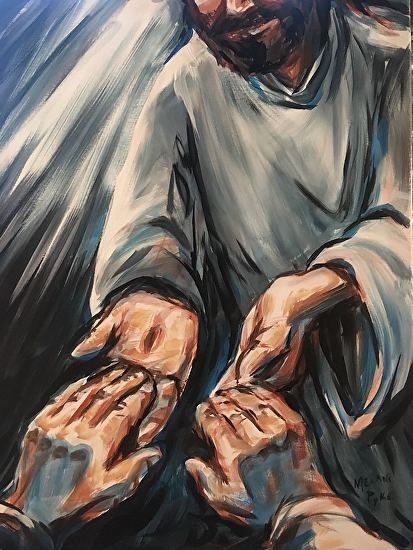 know that he was asking him to believe that this wounded stranger before him is the same Jesus he saw being crucified to death and who is now risen and alive. But was He asking more of Thomas and of us when he said: “Blessed are those who have not seen me yet believe”? Was he referring to something deeper than just belief in his Resurrection?
There is a definite pattern to the appearances of Jesus in the lovely stories we hear during Eastertide: In each encounter he is not recognisable to his followers, he is a stranger, until some word or mannerism or characteristic jolts them into realising that it is Jesus. In today’s Gospel it is when Jesus shows the disciples his wounds that they recognise him and rejoice. And the same with Thomas, who can’t believe the news from his companions but when he sees Jesus’ wounds says: “My Lord and my God”.
When Jesus walked with us in person he left us in no doubt as to where we would find him: “I was a stranger and you welcomed me” and “In as much as you did it to the least of these, you did it to me” (Mt 25, 34 – 40)
In his appearances after his Resurrection he walks his talk: He comes among them as a wounded stranger. And in today’s encounter his message seems to be: You will find me in the woundedness and brokenness of others.
Thomas the Apostle, speaks to us again in the words of Edward Hayes:
“I doubt today, as long ago, but I doubt that you really believe that He is risen and among us. I doubt seriously that if on meeting someone homeless or broken in your neighbourhood, you would say, “My Lord and my God.”
Yes, Jesus is alive and lives on forever and ever in each one of us, in the least of us as much as in the greatest.
The foregoing reflection is well worth perusing: “THE PASSION AND DEATH OF JESUS ACCORDING TO ST. THOMAS”. It can be found in “Prayers for a Planetary Pilgrim” by Edward Hayes.