

Mairead Morrissey
4th Sunday of Lent
30th March 2025
The 4th Sunday of Lent ‘Laetare Sunday’ marks the halfway point in our preparation for Easter. It takes its name from the opening words in today’s Mass ‘Laetare, Jerusalem.’ So, the Church rejoices in joyful anticipation of the Easter mystery. The Scripture readings give us great reason to rejoice. In the first reading the Hebrews celebrate their first Passover in the Promised Land (Josh 5:9-12). Paul tells us that Christ has reconciled us to the Father (2 Cor 5:18-19), and the Prodigal Son is welcomed back by his father (Luke 15:11-32).
In the first reading from Joshua, we experience the joy and happiness of the Israelite people on hearing the words of the Lord spoken to their leader. ‘Today I have taken the shame of Egypt away from you’. They were a people who had been on the move for 40 days and 40 nights, making their way through the wilderness and depending on manna for food. Now that they have reached the Promised Land there is no need for manna, they have become growers of their own food and joyfully celebrate their first meal in the Promised Land after all the years of wandering.
In the second reading of Paul to the Corinthians he joyfully proclaims that ‘In Christ’ God has reconciled all people to Himself without counting the cost. Christ took the initiative of reconciling us to God. In other words, owing to sin, we were cut off from God. However, through the sacrifice of Christ, we became God’s adopted children. So, we are all children of the same father through Christ’s sacrifice. He also reminds us that every Christian is called to be an ambassador of reconciliation for Christ. In essence, our responsibility extends beyond reconciling ourselves with God to proclaiming the message of reconciliation to others.
The Gospel reading from St Luke recounts one of the most well-known parables of Jesus, a parable unique to Luke ‘The Parable of the Prodigal Son’. It is central to Luke’s Gospel and reveals Jesus’ message of a Kingdom of love, mercy and forgiveness. The father is outside the house watching and anxiously waiting for his younger son. and when the son returns, he runs to him, holds him in his arms, kisses him, brings him in and throws a party. There are no negotiations or preset conditions only acceptance, forgiveness, and reassurance. 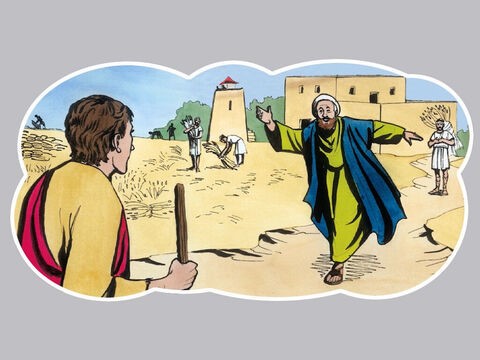 However, the sad truth is that the older son did not seem to know his father at all, even though he was living with him. He kept his distance. He did not want anything to change his opinion of his Father as an upright but demanding man who expected nothing less than complete loyalty. He did not take time to speak with him, to realise how much he continued to grieve over the departure of his younger son, and how he longed for the day when he would return. One might ask, did the elder son ever love his father or his brother? He could not bring himself to share in the homecoming celebrations, he could not understand it, he could not feel love in his heart, he had cut himself off completely. Despite everything his father did not give up on him he came out of the house a second time to try to persuade him to come in. This is the same with our heavenly Father, form the moment we sin we know he is there with open arms awaiting our return. This can only be achieved by listening to the voice of Christ deep within our being.
Luke advocates the theme that God’s mercy transcends all human limitations on how God should treat sinners. Why is God so eager to forgive us as often as we plead for his mercy? St. Paul explains, by dying on the cross the Son of God has made amends for us already. “For our sake God made the sinless one into sin, so that in Him we might become the goodness of God” (2 Cor. 5:21). This is the perfect expression of the heart of a loving and forgiving God. It is a description of the kingdom of God, it shows the universality and inclusiveness of the kingdom as expressed in this parable. The transformation towards holiness is the goal of the kingdom. The moment one realizes the enormity of one’s sin and responds with a firm decision towards repentance, the doors of the kingdom are thrown open. Keeping in mind the words of the father, and our Heavenly Father “All I have is yours”.
Therefore, throughout the remainder of this Lenten season let us seek to be reconciled with God through Christ. Let us humbly rediscover ourselves, and like the Prodigal Son, confess: “I have sinned against heaven and earth.” This is what Paul means when he appeals to us to be reconciled to God. He simply asks us to recognise where we are at in life and to adjust our path and mindset. In the end, this divine connection must surely transform us and our connection to one another and the world around us.