
Second Sunday of Christmas
4th January 2026
Sirach 24:1-4, 8-12; John 1:1-18

Elizabeth Ferguson OP
There is nothing shy about Wisdom as portrayed in the first reading offered us today from the Book of Sirach. She is sure of her origin, as coming forth from the mouth of the Most High. Her tent was pitched on the heights and her throne was a pillar of cloud. But, then the instruction came from God, and God, her creator, fixed a new place for her tent. That new place was among people, and there she has taken root.
Let us move to the Gospel reading from the 1st Chapter of John’s Gospel. It is not Jesus who is making claims about himself, but this early Joannine church community. Jesus is identified as the Word who was with God in the beginning, who indeed was God, and through whom all things came into being. What has come into being is life, a life that is light and that cannot be overcome by the darkness. And the Word became flesh and pitched his tent among us.
What a powerful image we are given – both Wisdom and the Word pitching their tents among us. The invitation is open to us, “Come to the tents of Wisdom and the Word.” The tent was a symbol of pilgrimage and impermanence, but it also represented the presence of God. It was seen as a place of divine encounter and divine hospitality. So, it is not a static building, because the Presence of God moves with God’s people.
A tent is basic accommodation. There is no space for extras nor for the comforts we have come to consider necessary for a dwelling. If we can enter the tents of Wisdom and the Word, we come face to face with the mystery of the indwelling divinity. There is nothing to distract.
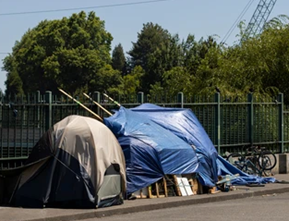
Perhaps, it might be worthwhile to pause the next time I see a tent on the street, and to remind myself that both Wisdom and the Word have pitched tents in our midst. It is in the unadorned that we find them, in the faces of the tent inhabitants. These are the most likely places where we find Wisdom and the Word which cannot be overcome by darkness.
Segundo domingo de Navidad
Eclesiástico 24:1-4, 8-12; Juan 1:1-18
No hay nada tímido en la Sabiduría tal y como se describe en la primera lectura que se nos ofrece hoy del Libro del Eclesiástico. Ella está segura de su origen, ya que proviene de la boca del Altísimo. Su tienda estaba plantada en las alturas y su trono era una columna de nube. Pero entonces llegó la instrucción de Dios, y Dios, su creador, fijó un nuevo lugar para su tienda. Ese nuevo lugar estaba entre la gente, y allí echó raíces.
Pasemos a la lectura del Evangelio del capítulo 1 del Evangelio de Juan. No es Jesús quien hace afirmaciones sobre sí mismo, sino la primitiva comunidad eclesial joánica. Jesús es identificado como el Verbo que estaba con Dios en el principio, que era Dios y por medio del cual todas las cosas fueron hechas. Lo que se hizo fue la vida, una vida que es luz y que no puede ser vencida por las tinieblas. Y el Verbo se hizo carne y plantó su tienda entre nosotros.
Qué imagen tan poderosa se nos da: tanto la Sabiduría como el Verbo plantando sus tiendas entre nosotros. La invitación está abierta para nosotros: «Venid a las tiendas de la Sabiduría y del Verbo». La tienda era un símbolo de peregrinación y de impermanencia, pero también representaba la presencia de Dios. Se consideraba un lugar de encuentro divino y de hospitalidad divina. Por lo tanto, no es un edificio estático, porque la Presencia de Dios se mueve con el pueblo de Dios.
Una tienda es un alojamiento básico. No hay espacio para extras ni para las comodidades que consideramos necesarias para una vivienda. Si podemos entrar en las tiendas de la Sabiduría y del Verbo, nos encontramos cara a cara con el misterio de la divinidad que mora en nosotros. No hay nada que nos distraiga.
Quizás valga la pena detenerme la próxima vez que vea una tienda en la calle y recordar que tanto la Sabiduría como el Verbo han plantado sus tiendas entre nosotros. Es en lo sencillo donde los encontramos, en los rostros de los habitantes de las tiendas. Estos son los lugares más probables donde encontramos la Sabiduría y el Verbo, que no pueden ser vencidos por las tinieblas.